
Can Reishi Mushrooms Improve Sleep? An Evidence-Based Guide
Getting quality sleep is one of the most important things you can do for your health, yet millions of adults struggle with it. If you have been exploring natural options, you have probably come across Reishi mushroom as a potential sleep aid. But does the science actually support the hype? This guide breaks down the evidence, the mechanisms, and the practical details so you can make an informed decision.
Quick Answer: Can Reishi Mushroom Improve Sleep?
Reishi mushroom may help improve sleep quality for some people by supporting relaxation and stress resilience. However, current human research is limited, and there is not enough high-quality evidence to conclude that Reishi is an effective treatment for insomnia. While some users report better sleep, results vary depending on the individual and the quality of the supplement.
It is important to distinguish between "supporting sleep quality" and "treating a sleep disorder." If you occasionally toss and turn during a stressful week, Reishi might offer a gentle nudge toward calm. But if you are dealing with chronic insomnia, which means difficulty sleeping at least three nights a week for three months or longer, that warrants a conversation with a doctor, not just a new supplement.
Reishi mushrooms may improve sleep quality, and studies suggest reishi mushrooms reduce insomnia symptoms, but these findings come with caveats. Most trials have been small, short, or used Reishi blended with other ingredients. The calming effects some people notice are real for them, but they are not guaranteed for everyone. Your dose, extract type, stress load, and overall habits all play a role.
What Is Reishi Mushroom? (Ganoderma lucidum)
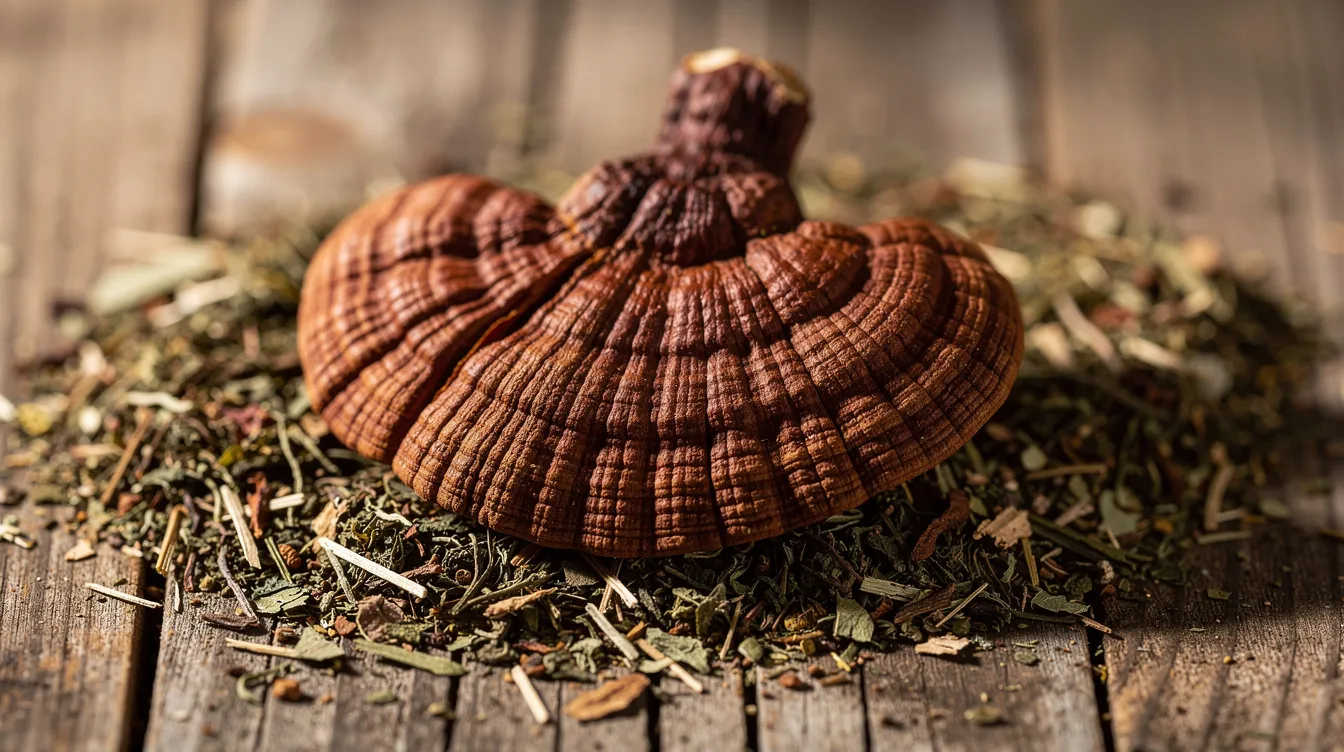
Reishi, scientifically known as Ganoderma lucidum, is a woody, bitter-tasting functional mushroom that has been a cornerstone of East Asian healing traditions for over two thousand years. Reishi mushrooms have been used in traditional medicine for centuries, primarily in Chinese, Korean, and Japanese practice. In Mandarin it is called "lingzhi," and it is sometimes translated as the "mushroom of immortality." Reishi mushrooms are often referred to as nature's Valium or the mushroom of immortality because of their reputation for promoting calm and longevity.
On the market today, you will find Reishi in several forms: dried fruiting body slices, powdered extract capsules, dual-extract tinctures, and instant drink mixes designed for evening use. The distinction between fruiting body and mycelium matters. The fruiting body is the mature mushroom itself; mycelium is the root-like network grown on grain. Most traditional preparations and a significant portion of the research focus on the fruiting body, which tends to concentrate the bioactive compounds people are after.
Those bioactive compounds include triterpenes and polysaccharides such as beta-glucans. Reishi mushrooms contain triterpenes that promote relaxation, while beta-glucans are studied primarily for their immune-modulating properties. Standardized extracts that disclose triterpene and beta-glucan content offer more consistency than generic whole-mushroom powders, which is worth knowing before you spend money on a product.
What Does the Research Say About Reishi and Sleep?
Most evidence for Reishi and sleep comes from animal studies, laboratory research, or small human trials. High-quality randomized controlled trials focused specifically on Reishi and sleep remain scarce, and no major clinical guidelines currently recommend Reishi as a first-line sleep therapy.
On the human side, a 2026 randomized, double-blind, placebo-controlled trial enrolled 50 adults and tested a mushroom blend containing Reishi against placebo over 12 weeks. Participants showed significant improvements in self-reported sleep quality measured by the Pittsburgh Sleep Quality Index at both 6 and 12 weeks (p<0.001). Anxiety, depression, and fatigue scores also improved, and serum cortisol and ACTH levels dropped. The limitation: it was a blend, not Reishi alone, and the sample was small. The evidence for Reishi's effectiveness in treating insomnia is still limited compared to other treatments like cognitive behavioral therapy or prescription medications.
Animal and preclinical findings are more targeted. In rodent studies, Reishi extracts shortened sleep latency and increased non-REM sleep duration. Reishi may help reduce sleep latency by an average of 7 minutes, and reishi mushrooms can enhance sleep duration based on these preclinical models. Triterpenes from Reishi also potentiated sedation in animals given pentobarbital, suggesting some interaction with GABAergic pathways. These results are promising but cannot be directly transferred to humans.
When you sort the evidence into buckets, the picture becomes clearer. For subjective sleep quality, like feeling more rested or waking less often, the evidence is emerging and cautiously positive. For stress reduction and anxiety-like symptoms, the data is moderately supportive, especially when Reishi is combined with other adaptogens. For clinical insomnia as a diagnosed disorder, the evidence is insufficient. Herbal sleep aids like valerian and passionflower have somewhat more published trial data, though none are considered established treatments either.
A current trial (NCT07294482) is recruiting 100 participants to assess the effects of a 1:4 Reishi liquid extract taken 30 minutes before bed, with an estimated completion date of September 2026. Meanwhile, a preliminary report from a conference abstract suggested that Reishi extract reduced insomnia severity index scores more than melatonin in a trial, though this has not yet been peer-published and should be treated cautiously.

How Reishi May Support Better Sleep (Proposed Mechanisms)
The mechanisms behind Reishi's potential sleep benefits are proposed based on laboratory and animal data. Human mechanistic evidence remains preliminary, so treat these explanations as working hypotheses rather than confirmed facts.
Reishi acts as an adaptogen to help regulate the body's stress response. In practical terms, this means it may help modulate the hypothalamus-pituitary-adrenal (HPA) axis, the system that governs cortisol release. Animal studies have shown that Reishi lowered corticosterone (the rodent equivalent of cortisol) and reduced stress reactivity. If your sleep troubles are tied to mental over-arousal at bedtime, this stress-dampening effect could be relevant. Think of it as turning down the volume on stress signals rather than switching off the brain.
Some triterpenes and polysaccharides in Reishi appear to interact with neurotransmitter systems involved in relaxation. Preclinical evidence points toward GABAergic modulation, similar in concept to how certain calming herbs work, though far milder than benzodiazepines. Research suggests Reishi modifies gut microbiota to increase serotonin levels, adding another possible pathway through which Reishi may help improve sleep indirectly by reducing stress and promoting a more balanced mood.
Chronic low-grade inflammation and oxidative stress are linked to poorer sleep outcomes. Reishi's polysaccharides and triterpenes have shown suppression of inflammatory markers like C-reactive protein in human trials and antioxidant effects in animal models. These anti-inflammatory properties may contribute indirectly to more restorative sleep phases. Importantly, Reishi is not a sedative. It does not depress the central nervous system the way prescription sleep medications do. Its effects are more about nudging overall homeostasis, which explains why benefits tend to build gradually over weeks rather than appearing on night one.
Potential Benefits Beyond Sleep
Reishi's potential extends beyond the bedroom, though evidence quality varies and many findings are preliminary.
On the relaxation and stress management front, regular Reishi use is often associated anecdotally with feeling calmer and less reactive to daily stressors. The 2026 clinical trial showed reductions in anxiety scores and cortisol levels, supporting the idea that Reishi may help take the edge off without sedation. Some users report fewer nighttime awakenings or feeling more rested in the morning, though these experiences are subjective and not guaranteed across the board.
For immune support, beta-glucans in Reishi have been studied for their effects on natural killer cell activity and cytokine balance. This is about supporting normal immune function rather than treating infections or disease. A review from Memorial Sloan Kettering notes that cancer patient trials often report improved well-being and reduced fatigue with Reishi formulas, though objective disease treatment claims are not supported.
In the context of healthy aging, antioxidant and anti-inflammatory properties are being explored for their relevance to cardiovascular markers and metabolic health. These are early-stage findings. The most responsible way to think about Reishi is as a possible alternative addition to a broader wellness routine that already includes good nutrition, regular movement, and solid sleep hygiene, rather than a stand-alone solution for any single health goal.
Who Might Consider Reishi for Sleep Support?
If you are an adult dealing with occasional stress-related sleep disturbances, such as a rough patch at work, exam pressure, or the mental load of parenting, Reishi might be worth exploring. It is best suited for people who tend to spin mentally at night and want gentle relaxation support as part of a broader wind-down routine.
Those already focused on holistic wellness and who enjoy evening rituals like herbal teas or reading before bed may find Reishi fits naturally into that pattern. It is not a dramatic intervention. It is more like adding one more supportive layer to habits you are already building.
However, if you experience chronic insomnia symptoms three or more nights a week for three months or longer, Reishi should not be your primary strategy. The same applies if you suspect sleep apnea, restless legs syndrome, or another medical sleep disorder. These conditions require professional evaluation, not self-treatment with supplements. Keep your expectations realistic: some people notice subtle improvements over several weeks, while others feel no difference at all. If you are over 65, take medications, or have existing health conditions, discuss Reishi with your healthcare provider before starting.
Can Reishi Mushroom Improve Sleep? (Detailed Q&A Section)
Reishi mushroom may help improve sleep quality for some people by promoting relaxation and helping the body manage stress, but it is not a proven or FDA-approved treatment for insomnia. The evidence is strongest for stress reduction and perceived sleep quality rather than for clinical sleep disorders.
There is little high-quality evidence that Reishi helps people fall asleep significantly faster or stay asleep all night when dealing with clinically diagnosed insomnia. Modal language matters here: Reishi "may" or "can" support better rest, but it "does not" guarantee it. These are not just careful word choices. They reflect what the data actually shows.
Outcomes can differ depending on several variables. The dose and extract strength matter, as does whether the product contains only Reishi or a blend with other ingredients. Your individual sensitivity, age, caffeine intake, screen habits, and overall stress load all influence how you respond. Someone under moderate stress with mild sleep difficulty is more likely to notice a benefit than someone with a longstanding clinical sleep disorder.
Reishi mushrooms may improve sleep quality for some users, but persistent sleep problems deserve medical attention. If you have tried Reishi consistently for four to six weeks without improvement, that is useful information. It does not mean the product failed universally; it means your sleep issue may need a different approach. Consider Reishi a supportive tool rather than a replacement for professional care or prescription medication.

How to Choose a Quality Reishi Supplement
Product quality varies dramatically in the mushroom supplement market. Choosing well is crucial for both safety and any chance of consistent results.
Start with species identification. The label should clearly state Ganoderma lucidum or a closely related, well-studied species. Avoid vague "mushroom complex" blends that do not disclose which species are included or in what amounts. Transparent labeling without proprietary blends is a strong positive signal.
Fruiting body extracts are generally preferred. They concentrate the triterpenes and beta-glucans found in traditional preparations and in the majority of research studies. If the product uses mycelium grown on grain, make sure that is clearly disclosed, because grain filler can dilute the active compounds significantly.
Extraction method is another differentiator. Dual extraction, combining hot water and alcohol, pulls out both water-soluble polysaccharides and alcohol-soluble triterpenes. This broader spectrum of compounds may be more relevant for sleep and relaxation support than a single-extraction product. Some modern products use dual-extract powders packaged as evening drink mixes.
Look for third-party testing for purity, heavy metals, and microbial contamination. GMP-certified manufacturing adds another layer of confidence. If the label discloses standardized beta-glucan or triterpene content, that is helpful for comparing products. In terms of form, capsules, powders, tinctures, and drink mixes all deliver Reishi effectively, but watch for unnecessary fillers, excessive sugars, or additives. A product in any form, whether from a sealed container, a glass jar, or a plastic container, should list every ingredient plainly.
Best Time and Way to Take Reishi for Sleep Support
Many people take Reishi in the evening, roughly 30 to 60 minutes before bedtime. Some product labels recommend taking a serving one to two hours before sleep or during periods of heightened stress. Timing can be flexible, but evening use is the most common approach when the goal is sleep support.
Consistency matters more than exact clock time. Taking Reishi at roughly the same time each day for several weeks gives the best chance of noticing effects. Adaptogenic compounds tend to show more noticeable impact after continued, regular use rather than from a single dose.
Some people tolerate Reishi better with a small snack, while others do fine on an empty stomach. Follow the manufacturer's guidance and adjust based on your comfort. Reishi is unlikely to cause daytime drowsiness for most users, but it is smart to try it first on an evening when you have a low-demand day ahead, just to see how your body responds.
If you work shifts or keep an irregular schedule, align Reishi timing with your personal night rather than the clock. The goal is to pair it with your wind-down period, whatever time that happens to be.
Safety, Side Effects, and Interactions
Reishi is generally well tolerated by most healthy adults when used at recommended doses and for appropriate durations. Reishi is generally safe for short-term use but may cause rare liver injury with prolonged use, particularly with powdered whole mushroom taken continuously beyond about one month.
Possible side effects of Reishi include dry mouth, dizziness, and stomach upset. Some individuals also report throat irritation, skin rash, headache, or nosebleed. In rare cases, paradoxical insomnia has been reported. These effects are generally mild and resolve after discontinuation.
Reishi can interact with blood thinners and some blood pressure medications. Specifically, it may increase bleeding risk when combined with anticoagulants like warfarin or antiplatelet drugs. It may lower blood pressure, creating additive effects with antihypertensives. It may also influence blood sugar levels, so people taking diabetes medications should use caution. Immunomodulatory effects mean that individuals on immunosuppressants or with autoimmune conditions should consult the Merck Manual guidance or speak with their specialist before starting.
Pregnant or breastfeeding individuals should avoid Reishi or seek medical advice before use. If you have surgery scheduled, consider stopping Reishi at least two weeks beforehand unless your doctor advises otherwise. Dietary supplements are not evaluated by the FDA for treating or preventing disease. That legal disclaimer on labels is not just fine print; it means the manufacturer has not proven therapeutic claims through the regulatory process required for drugs. If you experience any unusual symptoms, discontinue the supplement and contact a healthcare professional.
Combining Reishi with Sleep Hygiene and Other Supports
Reishi works best, if at all, as one component of a comprehensive approach to sleep. No supplement replaces the fundamentals.
The basics still matter most: maintain a regular sleep-wake schedule even on weekends, limit screens and bright light 60 to 90 minutes before bed, cut back on caffeine and heavy meals in the late afternoon and evening, and keep your bedroom cool, dark, and quiet. These habits form the foundation. Everything else is supplementary.
Reishi fits naturally into an evening routine as a ritual cue. A warm Reishi-based drink or a capsule taken alongside chamomile tea, followed by gentle stretching or reading a printed book, can signal to your brain that the wind-down period has begun. This behavioral anchoring can be just as valuable as the mushroom itself.
Some people combine Reishi with other non-prescription supports like magnesium or glycine. This is common and generally considered safe for healthy adults, but discuss combinations with a healthcare professional, especially if you take prescription medications or stronger sleep aids. Layering Reishi on top of prescription sedatives without medical supervision is not advisable.
It is also worth noting that cognitive behavioral therapy for insomnia, known as CBT-I, has a much stronger evidence base than any supplement on the market. Reishi should never delay someone from pursuing that kind of professional support when sleep problems are persistent or significantly affecting daily life.

FAQ: Common Questions About Reishi and Sleep
Does Reishi actually improve sleep? It may help some people. Evidence from small trials and preclinical research suggests potential benefits for subjective sleep quality and stress reduction, but large-scale proof is still lacking.
Is Reishi better than melatonin? They work differently. Melatonin is a hormone that helps regulate circadian timing, while Reishi functions as a stress and relaxation support. One preliminary report indicated that Reishi extract reduced insomnia severity index scores more than melatonin in a trial, but this finding has not yet been peer-published. No definitive head-to-head comparison exists.
How long does Reishi take to work for sleep? Some people notice subtle effects within the first week. Others need several weeks of consistent use. Some feel no difference at all. Patience and consistency are the common advice from practitioners.
Should I take Reishi every night? It is often used daily. Follow the product directions and consider periodic breaks if your practitioner recommends them. There is no established protocol for cycling on and off.
Can I combine Reishi with magnesium or other supplements? Many people do, and this combination is generally tolerated well by healthy adults. However, the total sedative or calming load of multiple supplements should be discussed with a professional, especially if medications are involved.
Does Reishi make you sleepy during the day? Unlikely for most people. Reishi is more about calm than sedation. Start on a low-demand day to see how you respond before making it a daily habit.
What is the best time to take Reishi for sleep? Most users take it 30 to 60 minutes before bed, or up to two hours before. Follow the label and pair it with your personal wind-down routine.
Is "Reishi" related to Old English or Middle English words? No. "Reishi" is a Japanese loanword, entirely unrelated to Old English or Middle English vocabulary. However, the word "can" that appears throughout this article, as in "can Reishi mushrooms improve sleep," has a fascinating linguistic history worth a brief aside. According to the Collins English Dictionary, "can" traces back to Old English "cunnan" and Middle English "canne," with roots also seen in German "können." The word "can" functions as a modal verb and auxiliary verb used to express ability, possibility, and permission in spoken English and formal contexts alike. Its pronunciation is often noted as strong kæn. It carries several meanings across different contexts: as a verb it can express ability (as in "I can play chess"), grant permission, or indicate possibility in both present and past tense, with senses indicating possibility and the sense that occurs in negative constructions and old fashioned expressions suggesting doubt. As a noun, "can" has a separate etymology from Middle English "canne" and refers to a sealed metal container, typically made of thin sheet metal or sheet iron coated with tin, designed with an airtight seal to preserve food like vegetables, fruit, and tomatoes. If your garden produces more tomatoes than you can possibly eat, you might store them in four cans or a glass jar to last winter long, much as canned canning has preserved food for generations. A can or glass jar keeps food safe even during a power failure. The word also functions in informal usage and slang: in military slang a "can" means a depth charge, while esp US slang uses it to mean rear end or toilet. You might say "the boss canned him" to mean someone was fired, or describe an annoying noise as "canned laughter." In film, a "can" refers to a container holding film reels. People yesterday might have stored drink in a sealed container made of other metal, and the form appears as a plural (cans) or in idioms and related terms across three languages. The noun sense of a container, whether a sealed metal container or a plastic container, is entirely distinct from the modal verb sense. These synonyms and overlapping words in English show how a single form can carry wildly different meanings, much like how Reishi itself can serve different purposes in different contexts. But back to mushrooms and sleep: the future of Reishi research looks promising, and that is a possible alternative worth watching.
Comparison Table
|
Sleep Goal |
Can Reishi Help? |
Evidence Strength |
|---|---|---|
|
Relaxation |
May help |
Moderate |
|
Stress Management |
May help |
Moderate |
|
Sleep Quality |
Potential benefit |
Emerging |
|
Falling Asleep Faster |
Limited evidence |
Limited |
|
Chronic Insomnia Treatment |
Not established |
Insufficient |
Key Takeaway
Reishi mushroom may support better sleep by promoting relaxation and helping the body manage stress, but it is not a proven treatment for insomnia. It is not a replacement for prescription sleep medications or evidence-based therapies like CBT-I. If you choose to use Reishi, select a high-quality, third-party tested supplement and pair it with solid sleep habits. Persistent sleep issues, loud snoring, or severe daytime fatigue warrant evaluation by a qualified healthcare professional. Reishi can be a helpful tool for some people, but informed, cautious, and holistic use is key.