

Best Mushroom Supplements for Women: Top 7 Science-Backed Options for Wellness
Mushroom supplements have moved well beyond the shelves of niche health stores. Functional mushrooms like lion's mane, reishi, and cordyceps now appear in capsules, powders, tinctures, and even daily beverages marketed toward women's wellness. But which mushroom species actually have research behind them, and how do you separate quality products from empty marketing?
This guide breaks down the top seven medicinal mushrooms backed by human research, explains how wellness goals may shift across life stages, and gives you a practical framework for choosing the best mushroom supplement for women based on evidence rather than branding.
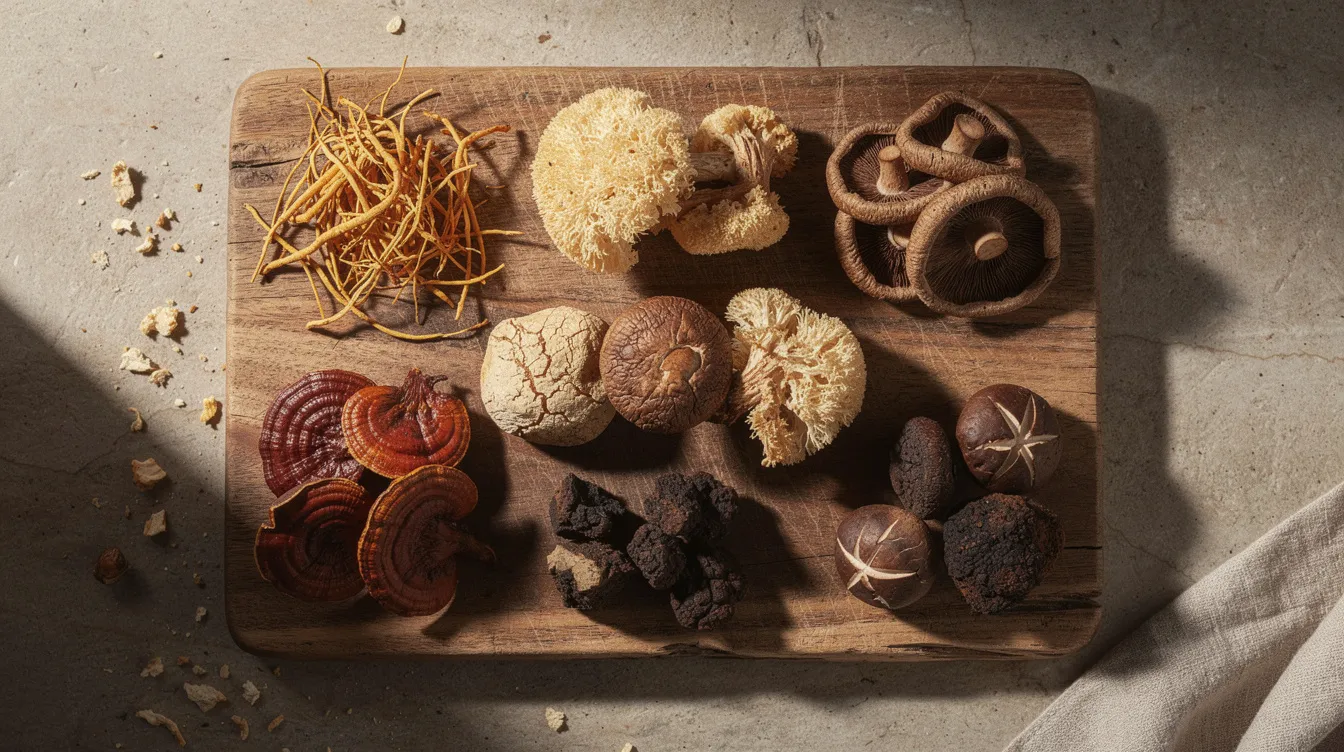
How We Chose the Best Mushroom Supplements
Not every mushroom supplement deserves a spot on this list. Here's the criteria we used:
· Strength of scientific evidence: Priority went to mushroom species with published human trials measuring relevant outcomes for women, not just animal or in vitro studies.
· Quality of extraction and standardization: Higher polysaccharide (beta-glucan) content indicates superior quality in mushroom supplements. Dual-extraction methods enhance the quality and effectiveness of mushroom supplements by capturing both water-soluble polysaccharides and alcohol-soluble compounds like triterpenes.
· Bioactive compound content: We looked for products that disclose beta glucans, triterpenes, cordycepin, or other standardized bioactive compounds.
· Third-party testing and transparency: Third-party testing verifies product potency and contamination levels. Products should clearly identify mushroom species, extraction ratio, and sourcing.
· Safety profile: We reviewed adverse event data from clinical trials and flagged potential interactions.
· Suitability across life stages: Women in their 20s–30s, perimenopause, menopause, and healthy aging have different priorities. We considered evidence relevant to each.
· Form and convenience: Capsules, powders, tinctures, and functional beverages each have trade-offs for a daily routine.
Top 7 Mushroom Supplements for Women's Wellness
1. Lion's Mane
Lion's mane mushroom is the most studied functional fungi for brain health. Mushroom supplements support women's health by enhancing cognitive function, and lion's mane sits at the center of that research. Lion's Mane may also improve cognitive function and reduce anxiety, making it relevant across multiple wellness goals.
Why It Stands Out
Lion's mane extract contains hericenones (found in the fruiting body) and erinacines (found in mycelium), two compound families that no other mushroom species produces. In animal models, these compounds cross the blood-brain barrier and stimulate nerve growth factor production. Lion's Mane boosts nerve growth factor production in the brain, which is central to its cognitive benefits.
Best For
· Women seeking improved focus, memory, and mental clarity
· Supporting cognitive function during perimenopause and menopause, when brain fog is common
· A 2026 clinical trial is specifically testing lion's mane extract on cognitive functioning in middle-aged women
Key Strengths
· Lion's Mane may improve cognition in Alzheimer's patients. A 49-week study showed Lion's Mane improved daily living skills in participants with cognitive decline.
· A pilot trial in student-athletes (n=20) found improved reaction time after just three weeks at 1,000 mg/day.
· MCI trials used up to 3 g/day for 16 weeks with improvements in memory and recognition scores.
· Generally well-tolerated, with fewer than 10% of participants reporting mild GI discomfort.
Possible Limitations
· Effects may take 4–8 weeks of consistent use to appear.
· Limited research on long-term safety beyond a few months. More research is needed.

2. Reishi
Reishi mushrooms are often called the "queen of mushrooms" in traditional medicine circles. Reishi has been used in traditional medicine for over 2,000 years, particularly in traditional Chinese medicine for stress, sleep, and overall well being.
Why It Stands Out
Reishi is rich in triterpenes and beta-glucans. Animal studies suggest these compounds may modulate the HPA axis (your stress response system) and support GABAergic activity, which is linked to relaxation and sleep.
Best For
· Women dealing with chronic stress and sleep issues
· Supporting relaxation and functional wellness during demanding life phases
Key Strengths
· A 2026 RCT using a mushroom blend including reishi showed significant reductions in sleep disturbance (PSQI scores), anxiety, and fatigue over 12 weeks in healthy adults.
· A dedicated reishi extract trial (1:4 dual extraction liquid) for sleep quality is currently underway.
· Dual extraction captures both the polysaccharides and triterpenes that drive reishi's potential benefits.
Possible Limitations
· Bitter taste in powder form can be off-putting.
· May cause drowsiness if taken during the day-best used in the evening.
· Because most human data comes from a mushroom blend rather than isolated reishi, more research with single-species extracts is needed.
3. Cordyceps
Cordyceps mushrooms offer a non-stimulant approach to energy levels and stamina. Cordyceps may enhance stamina and post-workout recovery, making them popular among active women.
Why It Stands Out
Cordyceps militaris contains cordycepin and other nucleosides that may enhance cellular energy production. Unlike caffeine, cordyceps supports natural stamina without jitters or crashes.
Best For
· Active women seeking natural energy support
· Supporting exercise performance and recovery
Key Strengths
· A study showed Cordyceps can boost immune cells in 40 participants. One RCT with Cordyceps mycelium extract (1.68 g/day for 8 weeks) showed a ~38.8% enhancement in natural killer cells activity relative to placebo.
· In a 2024 trial of a Cordyceps militaris beverage (2.85 mg cordycepin/day), women showed significant increases in NK cell activity and reductions in IL-6 inflammation markers.
· No safety concerns were observed in glucose, lipid, kidney, or liver panels.
Possible Limitations
· Limited human studies compared to animal research for exercise-specific outcomes.
· Effects may be subtle for sedentary individuals-likely most beneficial for already-active women.
4. Turkey Tail
Turkey tail mushroom is one of the most extensively studied functional mushrooms for immune support. Turkey tail is widely researched for its immune-boosting effects, particularly in oncology settings.
Why It Stands Out
Turkey tail contains high concentrations of PSK (polysaccharide-K) and PSP (polysaccharide-peptide). PSK has been used as an approved adjuvant therapy in Japan since the mid-1970s. Mushrooms may help support the immune system during cancer treatments, and turkey tail is the species with the strongest data in this context.
Best For
· Women seeking to support immune function year-round
· Supporting gut health and microbiome balance
Key Strengths
· A phase I/II trial in breast cancer patients showed that 6–9 g/day of whole turkey tail powder increased lymphocyte counts, natural killer cells activity, and CD8+ T cells.
· Meta-analysis of RCTs in lung cancer (n=1,094) found PSK at 3 g/day improved immune function and other endpoints when added to chemotherapy.
· Consuming mushrooms may lower cancer risk by up to 45%, with turkey tail among the most studied species for certain cancers.
· May support healthy gut bacteria as a prebiotic.
Possible Limitations
· Benefits are primarily preventative rather than immediate symptom relief.
· Quality varies significantly between products-PSK and PSP content depend heavily on strain and extraction.
5. Chaga
Chaga mushrooms grow primarily on birch trees in cold climates and have a long history of use in Northern European and Russian traditional medicine. Chaga is known for its antioxidant and anti-inflammatory properties.
Why It Stands Out
Chaga has one of the highest antioxidant contents among superfoods. A 2026 extraction study found that optimized chaga extracts achieved over 98% DPPH radical scavenging and over 91% hydroxyl radical scavenging in vitro.
Best For
· Women focused on antioxidant support and healthy aging
· Supporting skin health from within (though note that Tremella improves skin hydration and elasticity and may be a better-studied option for this specific goal)
Key Strengths
· Extremely high antioxidant values in laboratory testing.
· Extraction method and delivery system (e.g., liposomal encapsulation) significantly influence potency and stability.
· Pleasant, mild flavor in tea form.
Possible Limitations
· Limited human clinical studies-most evidence is preclinical or in vitro.
· May interact with blood-thinning medications due to potential effects on clotting pathways.
6. Maitake
Maitake mushrooms bridge immune support and metabolic wellness with emerging clinical data. Maitake mushrooms may help regulate blood pressure and blood sugar.
Why It Stands Out
Maitake contains a unique beta-glucan structure, particularly a fraction called GFP-D, which has shown measurable metabolic effects in human trials. Its traditional use spans both immune modulation and support for blood sugar balance.
Best For
· Women seeking metabolic wellness support
· Supporting healthy immune function
Key Strengths
· A 2026 human trial (n=90) found that 400 mg/day of Maitake Fraction D over 12 weeks significantly lowered fasting glucose, HbA1c, total cholesterol, triglycerides, and LDL-C while increasing HDL-C by approximately 20%.
· A phase I/II trial in 34 postmenopausal breast cancer survivors showed immunologic modulation at varying doses.
· High beta-glucan content supports its potential for immune support.
Possible Limitations
· May affect blood sugar levels, which is a concern for women on hypoglycemic medications.
· Limited long-term safety data, and immune modulation effects appear dose-dependent and non-linear.
7. Shiitake
Shiitake mushroom is the most familiar culinary entry point into functional fungi, and it carries documented health benefits beyond nutrition.
Why It Stands Out
Shiitake contains lentinan, a polysaccharide studied in clinical cancer contexts primarily in Asia. Shiitake mushrooms contain bioactive compounds with anti-cancer properties. Its familiarity makes it accessible for women new to mushroom extracts.
Best For
· Women new to dietary supplements who want to start with a well-known mushroom
· Supporting heart health and immune function
Key Strengths
· Dietary studies show improvements in postprandial lipemia and glycemia, supporting healthy cholesterol levels.
· Well-researched immune-supporting properties via lentinan.
· Generally well-tolerated as both whole mushrooms and in supplement form.
Possible Limitations
· Less potent than specialized medicinal mushrooms like turkey tail or lion's mane in extract form.
· May cause skin reactions in sensitive individuals.
Quick Comparison of the Best Mushroom Supplements
|
Wellness Goal |
Recommended Mushroom |
Evidence Strength |
Best Supplement Form |
|---|---|---|---|
|
Focus & Memory |
Lion's Mane |
Moderate |
Capsule / Powder |
|
Stress & Sleep |
Reishi |
Emerging–Moderate |
Capsule |
|
Energy |
Cordyceps |
Moderate |
Capsule / Powder |
|
Immune Support |
Turkey Tail |
Moderate |
Capsule |
|
Antioxidant Support |
Chaga |
Emerging |
Powder / Capsule |
|
Metabolic Wellness |
Maitake |
Emerging |
Capsule |
|
Heart Health |
Shiitake |
Moderate |
Capsule / Extract |
Benefits vary significantly by mushroom species. A product labeled "mushroom blend" may dilute the specific compounds you need for your primary goal.

How to Choose the Right Mushroom Supplement
Choose Based on Your Wellness Goals
Match different mushrooms to your primary health objectives. A woman in her 20s–30s dealing with stress and fatigue will benefit from different species than a woman in perimenopause focused on cognitive function or a woman in menopause prioritizing immunity and metabolic health.
Choose Based on Quality Standards
Extracts from fruiting bodies of mushrooms are preferred for higher beneficial compounds. Look for fruiting body extracts rather than mycelium on grain, which may contain residual substrate. High beta-glucan content indicates mushroom supplement purity. The extraction method impacts the bioavailability of mushroom supplements, so verify whether a product uses hot water extraction, alcohol extraction, or both.
Many brands incorporate vitamins and nutrients in mushroom blends for women's wellness, but the core value should come from the mushroom extracts themselves, not added fillers.
Choose Based on Evidence Strength
Prioritize mushroom species with stronger human research for your goals. For cognitive function, lion's mane has the most data. For immune support, turkey tail leads. For energy, cordyceps has measurable trial results. For other supplements like chaga, the evidence is still primarily preclinical-worth considering but with realistic expectations.
How to Choose Checklist
Use this checklist when evaluating any mushroom supplement:
· Clearly identifies mushroom species (e.g., Hericium erinaceus, not just "mushroom complex")
· Standardized active compounds (beta-glucans percentage, cordycepin content, triterpene levels)
· Third-party tested for purity and potency-look for third-party testing seals like NSF or USP
· Transparent sourcing and manufacturing details
· Manufactured in GMP-certified facilities
· Appropriate serving size aligned with doses used in research
· Minimal additives and no unnecessary fillers-avoid supplements with fillers or grain starches
· Consider lifestyle factors like gluten free or vegan options, and look for non gmo and organic mushrooms where available
Safety Considerations for Women
Mushroom supplements are generally well tolerated for most healthy adults. Side effects observed in clinical trials are typically mild: occasional GI discomfort, nausea, or rare allergic reactions. However, mushroom supplements may interact with medications and are not suitable for everyone.
Consult a healthcare professional or registered dietitian before use if you are:
· Pregnant or breastfeeding: Human trials explicitly exclude pregnant and lactating women. Safety data does not exist for this population.
· Taking blood thinners or immunosuppressants: Mushrooms with high beta-glucan content or specific polysaccharides may theoretically affect clotting. Species like turkey tail, maitake, and cordyceps actively modulate the immune system and could interfere with immunosuppressant drugs.
· Managing diabetes or autoimmune conditions: Maitake in particular may enhance glucose-lowering effects, increasing hypoglycemia risk alongside diabetes medications. Immune-stimulating mushrooms could risk flares in autoimmune disease.
· Allergic to mushrooms: One case of acute hypersensitivity has been reported for lion's mane. If you react to foods containing mushrooms, supplements carry the same risk.
Mushroom supplements are not proven to specifically balance female hormones or treat menopause symptoms. Products marketed with those claims are ahead of the science.

Which Mushroom Supplement Is Best for You?
There is no single best mushroom supplement that covers every goal. Here's how to narrow it down:
· Choose Lion's Mane if cognitive support, mental clarity, and brain health are your priority. It has the strongest evidence for helping improve cognitive function.
· Choose Reishi if stress management and sleep quality are key concerns. Its traditional use and emerging trial data support relaxation.
· Choose Cordyceps if natural energy and exercise performance matter most. Trial data shows measurable immune and energy benefits.
· Choose Turkey Tail if immune support is your focus, particularly if you have a personal or family history related to certain cancers.
· Choose Maitake if metabolic wellness-blood sugar, cholesterol, blood pressure-is your primary goal.
· Consider a combination formula for multiple wellness goals, but verify that each species in the blend is present at research-relevant doses and not just sprinkled in for label appeal. Filters sort through marketing noise when you focus on potency and transparency.
Final Thoughts
There is no single "best mushroom supplement for women." The best choice depends on your individual health goals, the mushroom species included, extract quality, standardized active compounds, third-party testing, and overall product transparency-not simply marketing claims aimed at women.
The potential health benefits of functional mushrooms are real but nuanced. Benefits depend on species, extraction method, dosing, and consistency over time. A lion's mane capsule standardized for hericenones is a fundamentally different product than a generic "women's mushroom blend" with undisclosed ratios.
Start by identifying your primary wellness goal. Choose a single-species extract or a well-formulated blend with verified beta-glucan content, transparent sourcing, and organic certification where possible. Give it 8–12 weeks of consistent use before evaluating results. And consult a healthcare professional for personalized guidance, especially if you take medications or manage chronic conditions.
Quality trumps marketing. Your body, your life stage, and your goals should drive the decision-not the label.