

Ashwagandha vs Lion's Mane: Which Is Better for Brain Fog, Stress & Calm Focus?
Two of the most talked-about dietary supplements for brain health and stress sit on opposite sides of the wellness shelf: an ancient Ayurvedic root and a shaggy white mushroom. If you're asking whether is ashwagandha or lion's mane better, the honest answer is that it depends on what's actually bothering you. Here's how to figure that out.
Quick Answer: Is Ashwagandha or Lion's Mane Better?
Lion's mane is considered better for cognitive performance and memory support. If brain fog, slow processing speed, and long-term brain function are your primary concerns, lion's mane is typically the stronger pick. Ashwagandha is usually better if the main issue is chronic stress, anxiety, physical tension, or poor sleep-it has robust clinical evidence for calming the body's stress response and improving sleep quality.
For many people, the best option is combining ashwagandha and lion's mane to cover both stress resilience and cognitive clarity.
-
Best for brain fog and cognitive function: Lion's mane.
-
Best for stress, cortisol levels, and sleep: Ashwagandha.
-
Best for calm focus and overall brain support: Using both together with appropriate doses and timing.
The right supplement choice depends on individual health goals and needs. One is a herbal root extract; the other is a functional mushroom. They show up together in many "calm focus" stacks and lion's mane supplements, but they do very different things biologically.
What Are Ashwagandha and Lion's Mane, Exactly?
Ashwagandha (Withania somnifera) is a root-based herb used for centuries in ayurvedic medicine to support stress tolerance, restful sleep, and overall vitality. Modern ashwagandha supplements typically use standardized herbal extracts like KSM-66 or Sensoril, available as capsules, gummies, and tinctures. The ashwagandha root itself contains withanolides-natural compounds responsible for most of its health benefits.
Lion's mane (Hericium erinaceus) is a white, cascading "toothed" mushroom that grows on hardwood trees across North America and Asia. It has a long history in traditional chinese medicine and Japanese herbalism as both food and medicine. Today it's celebrated as a nootropic that sharpens focus and clears brain fog, and it's sold widely as lion's mane mushroom powders, capsules, and functional coffees for brain support.
The key distinction: ashwagandha is a classic adaptogen-it helps the body manage stress. Lion's mane is a nootropic and neurological support mushroom-it supports neuroplasticity and cognitive function. They're often grouped together in products, but only lion's mane is a true mushroom, and their mechanisms barely overlap.
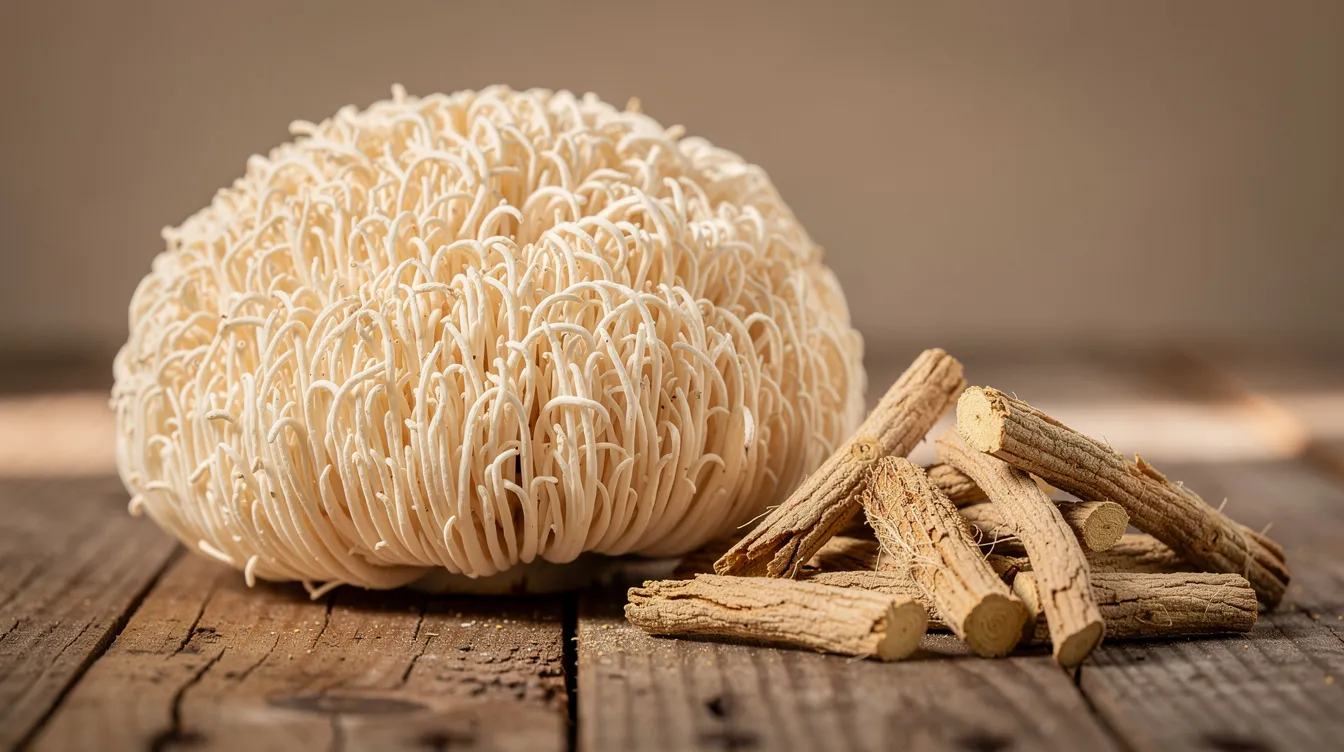
How They Work in the Body: Stress vs Structure
Here's the plain-English version of what each supplement does once it's in your system.
Lion's mane acts primarily on the structure and function of the nervous system. It stimulates nerve growth factor for cognitive support and encourages brain-derived neurotrophic factor (BDNF) production. Think of it as helping build and preserve the "hardware" of your brain-neurons, synapses, and the connections between them. It promotes nerve growth at a cellular level, which is why early research links it to improved focus and memory over time.
Ashwagandha targets the hypothalamic-pituitary-adrenal axis to regulate the body's stress response. The HPA axis is the body's stress response system-the command chain that controls cortisol release, fight-or-flight arousal, and recovery. When cortisol stays elevated from chronic stress, it impairs memory, brain function, and sleep. Ashwagandha helps normalize that signal, essentially optimizing the "software environment" so your brain can operate without constant interference from stress hormones.
Because they work on different pathways-lion's mane on structure, ashwagandha on stress-they can complement each other for calm focus, cognitive support, and overall mental health.
How Lion's Mane Supports Brain Fog, Focus, and Brain Health
Lion's mane supports memory and cognitive health through a set of natural ingredients found in its fruiting body and mycelium. The core health benefits center on cognitive function, mental clarity, and long-term brain health, especially with consistent use over several weeks.
The main mechanisms involve two groups of compounds: hericenones (concentrated in the fruiting body) and erinacines (primarily in the mycelium). These compounds appear to:
-
Encourage nerve growth factor (NGF) and BDNF production, both critical for neuron survival and plasticity.
-
Support neuroplasticity-the brain's ability to form and reorganize connections.
-
Protect neurons against oxidative stress and neuroinflammation with antioxidant support.
Lion's mane also promotes hippocampal neurogenesis for memory support, which explains why it supports alertness and processing speed in human trials.
A 2009 Japanese study showed improved cognitive scores with lion's mane: adults with mild cognitive impairment took 3,000 mg/day for 16 weeks, and cognitive scores improved progressively at weeks 8, 12, and 16. Notably, scores declined after participants stopped supplementation, suggesting continuous use matters.
A 2023 randomized trial in healthy adults using 1.8 g/day for 28 days found faster reaction times on cognitive tasks within 60 minutes of a single dose, with a trend toward reduced stress after the full 28-day period. Lion's mane enhances cognitive function and memory, and emerging data points toward potential support for myelination and neuroprotection-relevant for anyone thinking about healthy aging and long-term cognitive resilience. Lion's mane also supports long-term brain health, though it has limited clinical evidence compared to ashwagandha in overall trial volume.
How Ashwagandha Calms Stress, Cortisol & Sleep
Ashwagandha is best known for lowering perceived stress and anxiety, supporting healthy cortisol levels, and improving sleep quality. These effects make it one of the most studied adaptogens in modern mental performance research, with implications in biological psychiatry and general wellness.
The primary mechanisms work like this:
-
Ashwagandha regulates cortisol levels during stress by modulating the HPA axis, helping normalize cortisol that's been driven too high by a heavy stress load.
-
Withanolides interact with GABAergic signaling, contributing to a calming effect that reduces the "wired but tired" feeling many people experience.
-
Anti-inflammatory and antioxidant properties help protect the brain from damage caused by chronic stress.
When cortisol stays in check, memory, attention, and emotional balance improve over time. This means ashwagandha lowers cortisol, enhancing cognitive performance indirectly-not by boosting neurons, but by removing the noise that prevents them from working properly.
A 2026 dose-response meta-analysis covering 22 RCTs with 1,391 adults found large effect sizes for stress reduction and anxiety relief. A study showed 600 mg of ashwagandha significantly reduced cortisol in chronically stressed adults after roughly 60 days. Ashwagandha can improve sleep quality by 72% after 6 weeks in people with sleep complaints, and trials using 120–600 mg/day improved sleep onset and maintenance within 6–8 weeks.
Ashwagandha is recommended for generalized anxiety disorder by a growing number of integrative practitioners. Secondary benefits include potential support for energy, physical performance, physical well being, and testosterone support in men-all of which can influence mood and mental performance.

Head-to-Head: Which Is Better for Your Specific Goals?
Rather than declaring a single winner, here's how to match each supplement to your situation.
For brain fog and mental clarity, lion's mane has stronger direct evidence. It stimulates nerve growth factor production, promotes neuroplasticity, and delivers sharper focus over weeks of use. A meta-analysis of ashwagandha's cognitive effects showed meaningful improvements in memory (SMD 0.52) and attention (SMD 0.29), but those gains appear driven more by reduced stress than by structural brain changes. If the fog feels independent of your stress levels, lion's mane is typically the better starting point.
For stress, anxiety, and feeling constantly on edge, ashwagandha usually wins. Its trial data on reduced stress and anxiety is extensive, with large effect sizes across multiple populations. If your mind races at night and physical tension won't let go, this is where ashwagandha shines.
For sleep problems, ashwagandha has direct sleep data-better sleep quality, faster onset, and more restful sleep in multiple RCTs. Lion's mane may offer more subtle, indirect sleep support through lowering neuroinflammation.
For long-term brain health and healthy aging, lion's mane's neuroprotective data and its role in supporting nerve growth give it an edge for cognitive resilience over time.
For overall calm focus and productivity, stacking both ashwagandha and lion's mane supplements can address the "noise" (stress) and the "signal" (cognition) simultaneously.
If you wake with a racing mind and tight chest, think ashwagandha. If you stare at your screen and can't think clearly, think lion's mane.
Can You Take Ashwagandha and Lion's Mane Together?
For most healthy adults, taking lion's mane and ashwagandha together is considered reasonable and biologically sensible. Many people combine Ashwagandha and Lion's Mane for their complementary effects, and lion's mane and ashwagandha complement each other naturally because they operate through entirely different pathways.
Taking both can improve cognitive function and stress management at the same time. The combination can enhance mood and emotional resilience-ashwagandha calming the body's stress response while lion's mane supports the neural infrastructure for mental clarity and improved focus. This pairing is increasingly popular in nootropic-adaptogen stacks, functional coffees, and brain health blends.
No widely reported serious interactions exist between the two at standard supplemental doses. Both ashwagandha and lion's mane have been studied independently with generally good tolerance profiles.
Practical timing suggestions:
-
Take lion's mane in the morning for daytime cognitive clarity.
-
Take ashwagandha in the afternoon or evening for stress wind-down and sleep support-or split doses for all-day calm.
Some people prefer starting one supplement for two to three weeks to gauge its effects before adding the second. If you're on medications or have a complex health condition, discuss combined use with a healthcare professional.

Doses, Forms, and How Long to Take Them
Note: These are typical research-based ranges, not personalized medical advice.
Lion's mane dosing: Lion's Mane is typically dosed at 500–1,500 mg per day of concentrated lion's mane extract, while less concentrated powders may require 1–3 g/day. Fruiting-body extracts tend to be richer in hericenones; mycelium-based products contain more erinacines. Dual extracts aim to cover both. Many cognitive studies run 8–16 weeks, and lion's mane improves focus within 2-4 weeks of use for many people, with deeper effects building over months. Both supplements typically require consistent daily use for 2-4 weeks to notice effects.
Ashwagandha dosing: Standard dosing for Ashwagandha is 300–600 mg of root extract per day, often split into two doses. Benefits for stress and sleep commonly begin around weeks 2–4 and strengthen by weeks 6–12. The ashwagandha extract type matters-look for standardized withanolide content from reputable brands.
Duration and cycling: Lion's mane is often taken continuously for months for sustained brain support. Some practitioners suggest periodic breaks from ashwagandha (e.g., 8 weeks on, 2–4 weeks off) given limited ultra-long-term data, though trial durations up to 12 weeks have generally been well tolerated. Give yourself a few weeks of consistent use before judging results.
Choosing products: Seek third-party testing, clear labeling of extract type and standardization, and minimal unnecessary additives.
Safety, Side Effects & Who Should Be Careful
Both ashwagandha and lion's mane are generally well tolerated in studies, but they're biologically active substances with real potential for side effects and interactions.
Lion's mane safety:
-
Lion's mane is generally well tolerated by most adults and has a solid safety record in available research.
-
Mild digestive discomfort is the most common side effect of lion's mane. Lion's Mane may cause digestive upset in some individuals, along with occasional nausea or headache.
-
Very rare allergic or skin reactions have been reported; avoid if you're allergic to mushrooms.
-
Limited data exists for pregnancy and breastfeeding-medical guidance is recommended.
Ashwagandha safety:
-
Ashwagandha is considered safe for most adults at standard doses. Ashwagandha may cause drowsiness or stomach upset in some users, with digestive discomfort being the most frequent complaint.
-
Ashwagandha may interact with sedatives and thyroid medications. It may also interact with medications for thyroid disease, diabetes, and blood pressure, as well as immunosuppressants.
-
Rare liver injury reports exist at higher doses or with prolonged use, though RCTs at 250–600 mg/day have not shown these issues.
-
Ashwagandha root extract is often contraindicated in pregnancy.
Who should check with a doctor first: pregnant or breastfeeding individuals, people with autoimmune, thyroid, liver, or severe psychiatric conditions, and anyone on multiple medications. Start low, monitor how you feel, and stop if you notice unusual symptoms.
Real-World Stacking Strategies for Calm Focus
Here are three practical routines using both ashwagandha and lion's mane for brain support, stress reduction, and cognitive clarity.
"Brain fog first" routine:
-
Morning: Take lion's mane daily with breakfast or coffee to support cognitive function and mental performance.
-
Skip ashwagandha unless stress is significant. This keeps the focus on cognitive clarity.
"Stress and sleep first" routine:
-
Morning: Modest ashwagandha dose for daytime calm and stress buffering.
-
Evening: Second ashwagandha dose for sleep support and stress resilience.
-
Add lion's mane in the morning only if brain fog is also an issue.
Balanced "calm focus" stack:
-
Morning: Lion's mane plus a smaller ashwagandha dose for steady calm focus.
-
Evening: Additional ashwagandha if winding down is difficult and you need better sleep quality.
Pair any of these with healthy basics: good sleep hygiene, regular exercise, a nutrient-dense diet including basics like vitamin c, and adequate hydration. These natural ingredients and lifestyle habits create the foundation-supplements layer on top, not the other way around.
Track specific outcomes (brain fog intensity, stress levels, focus duration, sleep quality) over 4–8 weeks to judge whether your routine is delivering incredible benefits or needs adjusting.
Frequently Asked Questions (FAQ)
Is ashwagandha or lion's mane better for anxiety? Ashwagandha has stronger direct evidence for anxiety and cortisol reduction. Lion's mane's anxiety benefits are more indirect, working through lowered neuroinflammation and improved brain health rather than direct stress-axis modulation.
Which is better for focus and productivity? Lion's mane generally has the advantage for direct focus and processing speed. Ashwagandha helps indirectly by calming the stress that distracts attention, so if stress is the root cause of poor focus, ashwagandha matters too.
Can I take ashwagandha and lion's mane every day? Most human trials use daily dosing over weeks or months, and daily use is typical for both ashwagandha supplements and lion's mane supplements. Anyone with a health condition or on medications should confirm with a clinician first.
How long until I feel a difference? Some people notice changes within one to two weeks, but more robust effects on mental clarity and stress management usually appear around 4–8 weeks with consistent use.
Do I need to cycle off? Evidence is limited. Some experts recommend occasional breaks from ashwagandha, while lion's mane is often taken continuously. A personalized plan with a professional is best.
Bottom Line: How to Choose Between Ashwagandha and Lion's Mane
Lion's mane is the better pick when your primary goal is sharper focus, less brain fog, and long-term brain support. Ashwagandha is the better pick when your primary goal is lower stress, calmer mood, and better sleep, with secondary benefits for cognitive function. Taking both together is often ideal for people whose brain fog is tightly linked to chronic stress and poor sleep-the two supplements address different roots of the same problem.
Start by identifying your top one or two symptoms. "Can't focus" points toward lion's mane. "Can't relax" points toward ashwagandha. You can always layer in the second after a few weeks if needed.
Neither supplement is a magic bullet, but both can be meaningful tools when combined with healthy habits. Consulting a healthcare professional is especially important if you have medical conditions, take medications, or are considering long-term use.